Free VIN Checker & Decoder
Instantly decode standard 17-character Vehicle Identification Numbers (VIN) to verify manufacturer details, specs, and check duty rates.
Guide: Understanding Your Vehicle VIN
A Vehicle Identification Number (VIN) is a unique 17-character code that functions as your car’s digital fingerprint. No two cars in the world share the same VIN. Standardized globally under the ISO-3779 standard in 1981, this code contains complete details about where your car was built, what engine it runs, and its original specs.
1. Where is the VIN located on your vehicle?
Finding the VIN is quick and easy. On almost all modern passenger vehicles, you can locate it in these standard spots:
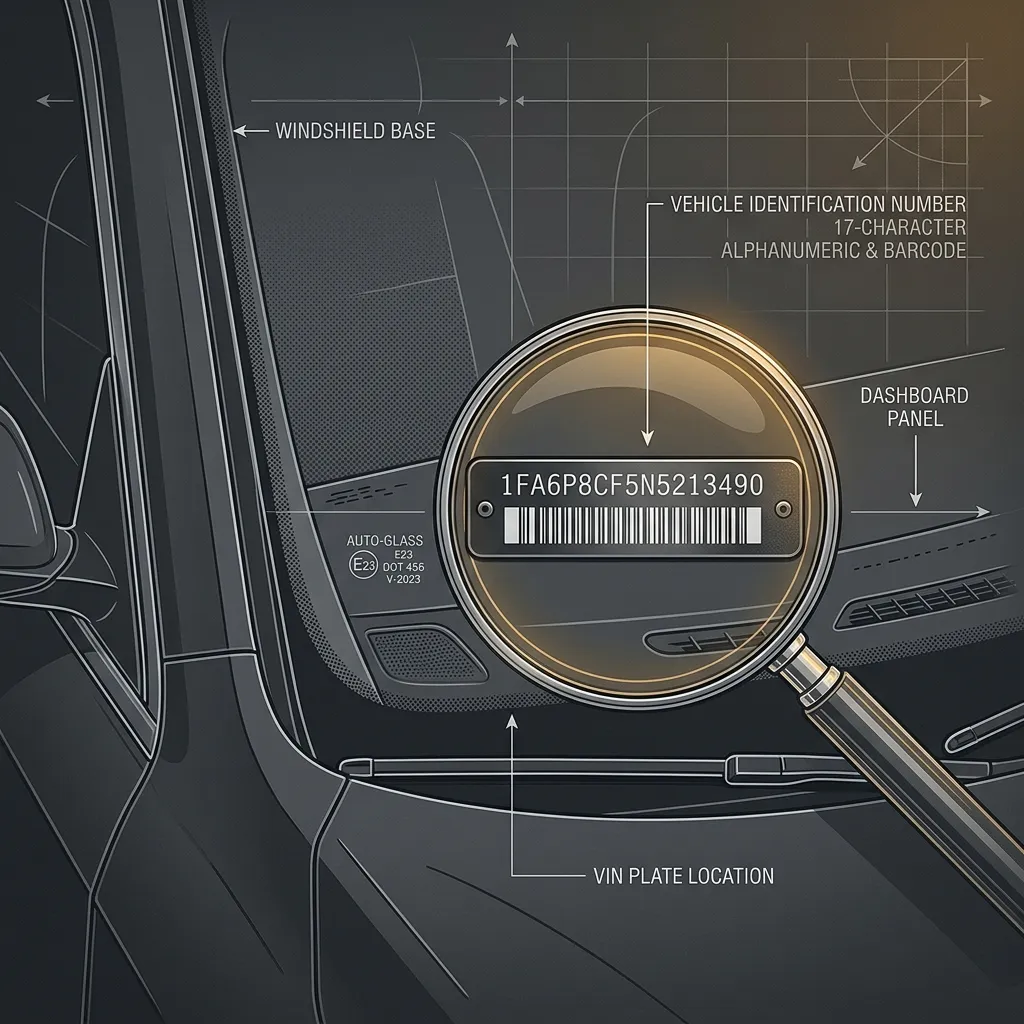
Driver’s Side Dashboard
Stand outside the vehicle near the driver’s side hood and look at the bottom corner of the windshield glass. The VIN is printed on a metal plate visible through the glass.
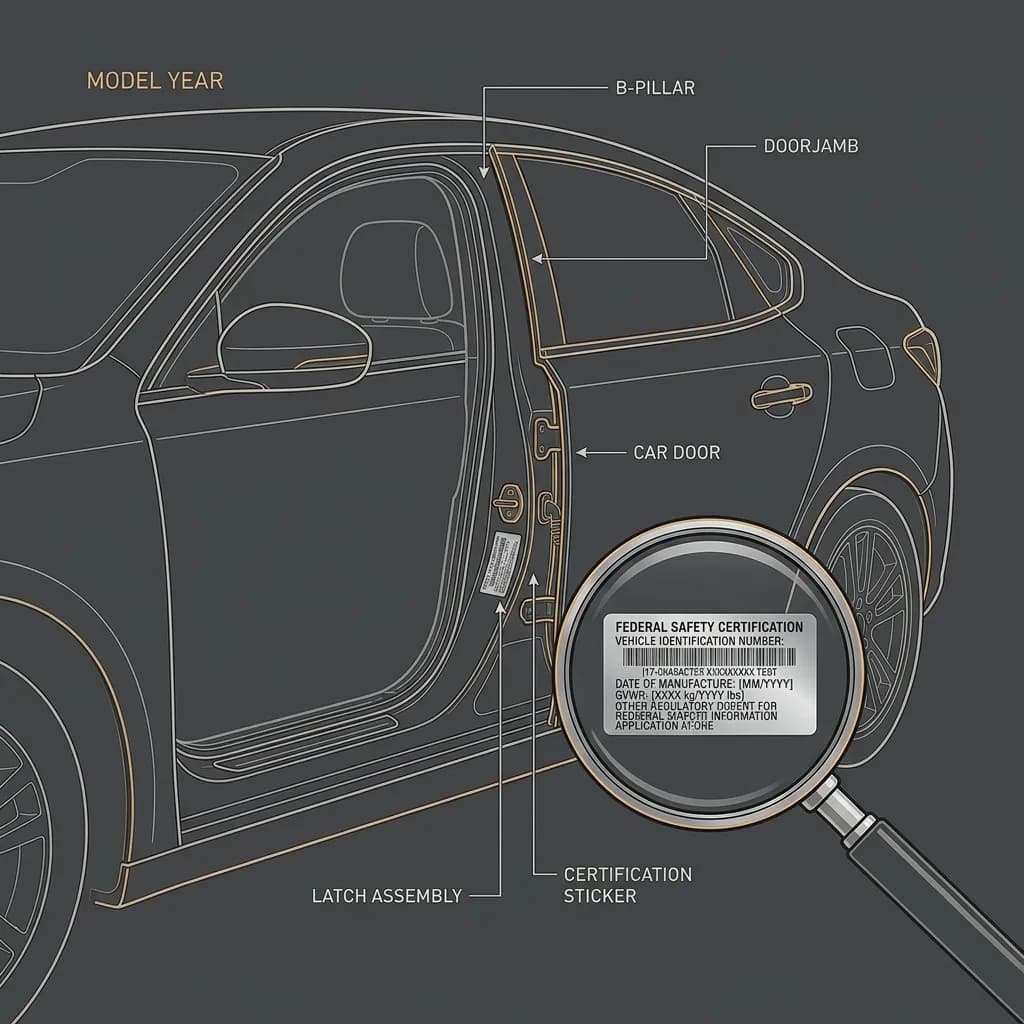
Driver’s Doorjamb (B-Pillar)
Open the driver’s door and check the latch post (B-pillar). You will find a silver federal safety certification sticker containing detailed specs and the VIN.
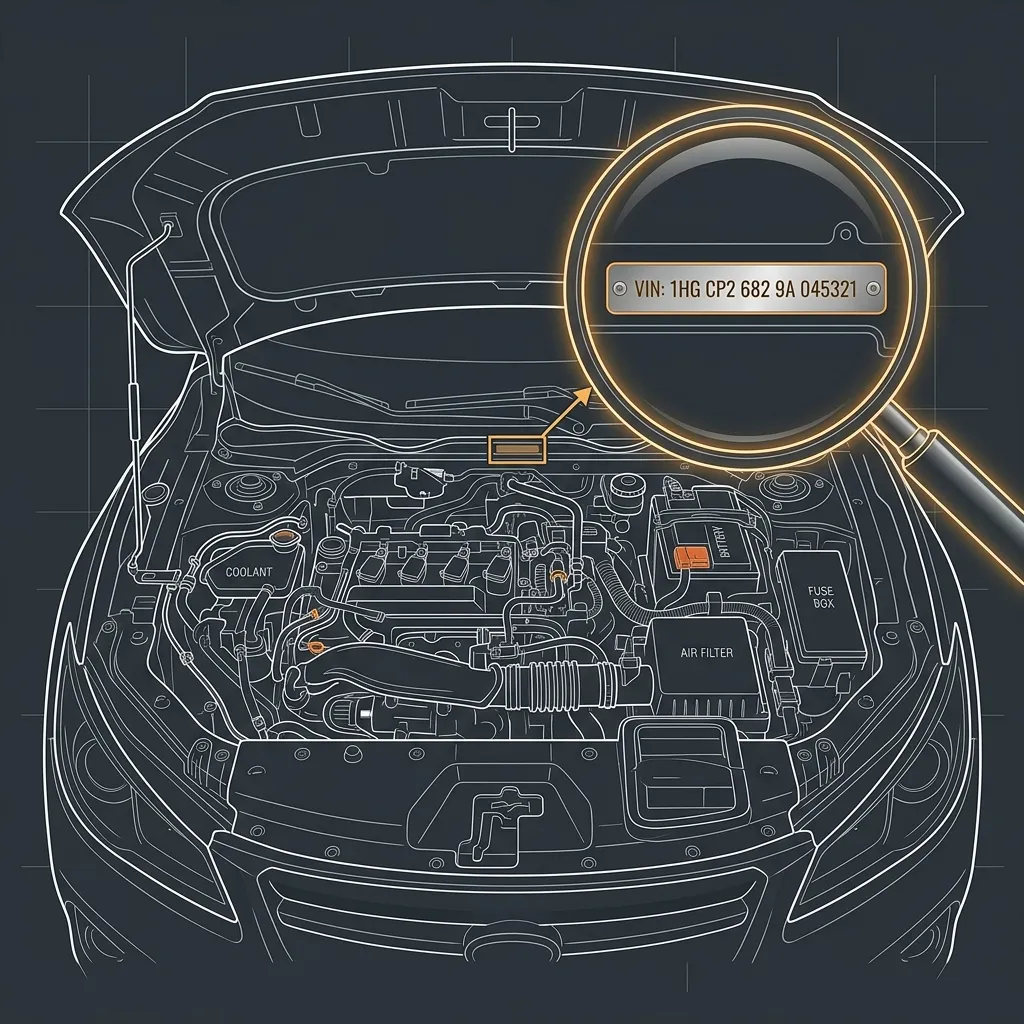
Engine Firewall / Block
Pop the hood and check the metal firewall at the back of the engine bay. Stamped directly onto the chassis plate or engine cylinder block.
4. Vehicle Paperwork & Documentation
If you are not near the vehicle, you can find the VIN printed on your car registration card, insurance policy certificate, custom clearing assessment papers, or the title certificate.
2. How the 17-Character Code is Structured
Each character block inside a modern VIN maps to specific vehicle specifications. A typical VIN is divided into three sections:
| Positions | Section | What it Reveals |
|---|---|---|
| 1 – 3 | WMI (World Manufacturer Identifier) | Country of origin, vehicle manufacturer, and division type. (e.g. 1, 4, 5 for USA; J for Japan; 2 for Canada; W for Germany). |
| 4 – 8 | VDS (Vehicle Descriptor Section) | Model type, body style, restraint system, engine configuration, and transmission specs. |
| 9 | Check Digit | A security checksum character calculated mathematically to ensure the VIN is valid and hasn't been altered. |
| 10 | Model Year | The manufacturing year. (e.g., K = 2019, L = 2020, M = 2021, N = 2022, P = 2023, R = 2024, S = 2025, T = 2026). |
| 11 | Assembly Plant | Internal code indicating the specific factory where the vehicle was assembled. |
3. Why you should ALWAYS decode your VIN in Nigeria
- Detect Trim Fraud: Scammers often upgrade the badges on base-model cars (e.g., sticking a "Limited" or "XLE" badge on a basic "LE" Camry) to inflate the price. A VIN check displays the exact original manufacture trim level.
- Nigeria Customs Verification: Under the Nigeria Customs Service's VIN valuation system, custom officers calculate vehicle duty values directly from the VIN. Mismatches can result in seized vehicles or heavy fines.
- Accurate Replacement Parts: Ordering parts in Nigeria can be complex. Mechanics can use the decoded engine details from your VIN to guarantee you source the exact compatible replacement parts.
Attention: For cars produced before 1981, VIN numbers do not follow a standardized length or encoding format. The Mottars VIN Checker works exclusively on modern standard 17-character VIN codes.