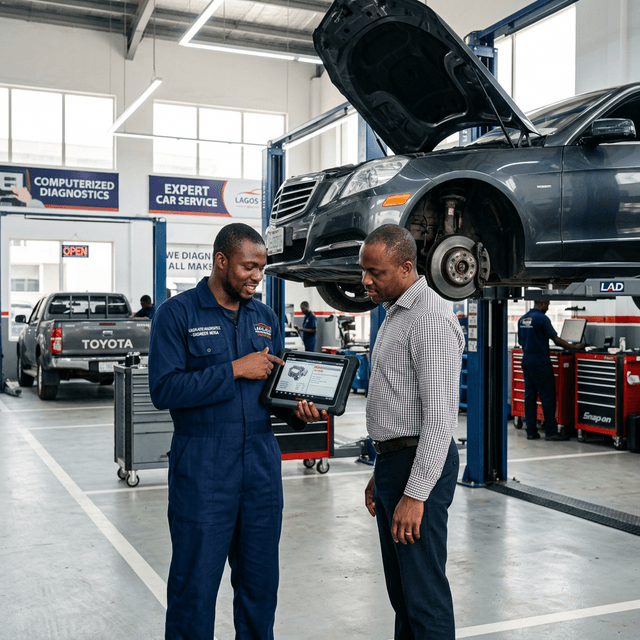
Tokunbo Inspection Checklist: 15 Things to Check (2026)
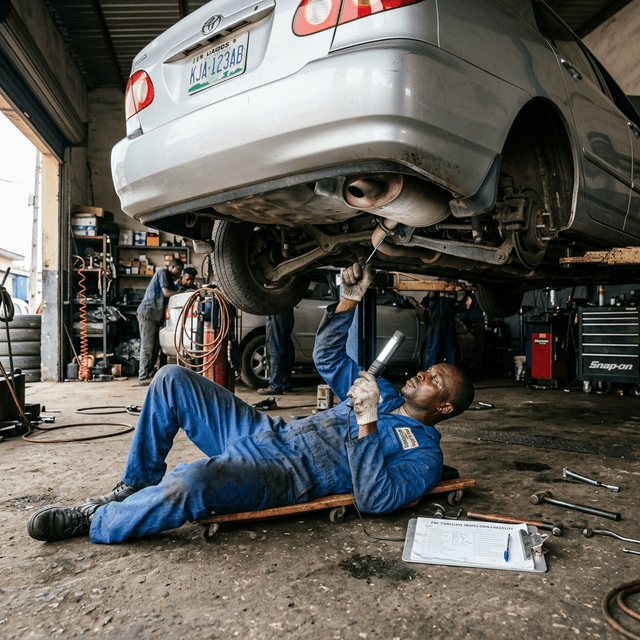
Buying a tokunbo car in Nigeria? Don't get scammed. Here is the complete 15-point inspection checklist to verify documents, exterior, interior, engine, and test drive before paying.
A Mottars "Know Before You Go" Guide
You have found the car. The dealer is smiling, keys in hand. He says it is clean, no issues, just buy and go. The price looks right. Your heart is saying yes.
But before you hand over a single naira, you need 45 minutes and this checklist.
A tokunbo (an imported used vehicle, typically from the United States, Canada, or Europe) can be an excellent buy. Tokunbo cars are generally preferred over "Nigerian used" (locally pre-owned) vehicles because they tend to have better maintenance history and lower mileage. But "tokunbo" does not automatically mean "good." Every year, thousands of Nigerian buyers discover hidden problems weeks after paying - problems that a thorough inspection would have caught on the spot.
This guide gives you 15 checks organized in 4 phases, covering everything from documents to engine to test drive. The entire inspection takes 45 to 60 minutes. That is all that stands between you and a confident purchase - or a confident walk-away.
Want a printable version? Download the free PDF checklist to take with you to the car lot.
And before you visit any dealer, read "9 Lies Car Dealers Tell Nigerian Buyers" so you know their playbook.
The 15-Point Tokunbo Inspection Checklist
Phase 1 - Documents
- Verify VIN matches dashboard, door jamb, engine bay, and customs papers
- Inspect original customs clearance documents (no photocopies)
- Verify vehicle registration and proof of ownership
Phase 2 - Exterior
- Check body panel alignment and gaps
- Test paint consistency - look for overspray and run the magnet test
- Inspect underbody and frame for rust, welds, or flood damage
- Check tyre condition, tread depth, and manufacture date
- Test all glass and lights
Phase 3 - Interior & Engine
- Compare interior wear (pedals, steering) to odometer reading
- Test all electronics and dashboard warning lights
- Inspect engine bay for leaks, fluid condition, and flood signs
- Perform a cold-start engine test (insist engine is cold)
Phase 4 - Test Drive
- Test transmission through all gears at various speeds
- Test brakes and suspension over speed bumps
- Complete a 20-minute extended drive and re-check everything
Now let us walk through each check in detail.
Before You Leave Home
The inspection starts before you get to the car lot. A little preparation puts you ahead of every other buyer at the market.
Research the specific car model. Search for "[year] [make] [model] common problems Nigeria" before you go. Every car has known weak points. Knowing them in advance means you know exactly where to look.
Set your full budget. Your budget is not just the purchase price. Add ₦5,000 to ₦50,000 for inspection costs, plus estimated first-year maintenance. A car that costs ₦4,000,000 but needs ₦600,000 in immediate repairs is really a ₦4,600,000 car.
Find an independent mechanic BEFORE you go. Never use the dealer's mechanic. Ask friends, ask on Nairaland, or find a mechanic on Mottars. Your mechanic works for you, not the seller.
What to bring:
- Your phone (for flashlight and camera)
- A fridge magnet (for the body filler test - you will learn why in Check #5)
- This checklist (printed or on your phone)
- An OBD2 scanner (optional, available from ₦5,000 online)
One more thing: Dealers will try to rush you. Budget 45 to 60 minutes for the full inspection. If a dealer resists giving you that time, that is your first red flag.
Phase 1: Documents - Do This FIRST
Check the paperwork before you even look at the car. If the documents are wrong, nothing else matters. You walk away before opening the bonnet.
Check #1 - Verify the VIN Matches Everything
The VIN (Vehicle Identification Number) is the DNA of the car. It is a unique 17-character code that identifies that specific vehicle. If it does not match across all locations, you are looking at a car with a hidden history.
What to do: Find the VIN in three places:
- Dashboard (driver's side, visible through the windscreen)
- Door jamb sticker (open the driver's door, look at the frame)
- Engine bay (stamped on the firewall or a metal plate near the front)
Now compare all three to the VIN on the customs clearance papers. Every single character must match.
What good looks like: All three VIN locations show the same 17-character code, clearly stamped or printed, matching the documents exactly.
What bad looks like: Any VIN is scratched out, re-stamped over an existing number, covered with a sticker, or missing entirely. The VIN on the papers does not match the one on the car. Walk away immediately. This is a car with something to hide.
You can also check the car's history on Mottars using the VIN for a detailed report on the vehicle's background.
Check #2 - Inspect Customs Clearance Documents
Fake papers are more common than fake cars. This is where many scams begin, so take your time.
What to do: Demand the original customs clearance documents. Never accept photocopies. Check the following details against the car in front of you:
- Importer name
- Vehicle description (make, model, year, colour)
- VIN (must match all three locations on the car)
- Clearing port and date
You can verify customs documents through the Nigeria Customs Service official channels.
What good looks like: Original documents with consistent details that match the vehicle. The paper shows appropriate wear for the car's import date - a car imported in 2023 should not have pristine, freshly printed documents.
What bad looks like: Photocopies only ("the original is with my brother"). Documents that look too new or too clean for an older import. Details that do not match - the papers say blue but the car is black, or the year does not match the VIN decode. Walk away.
Check #3 - Verify Vehicle Registration
This protects you legally. If the registration is wrong, you could be buying a stolen vehicle.
What to do: Check that the vehicle licence matches the car (make, model, colour, plate number). Verify proof of ownership documentation. If the seller's name does not appear on the registration, ask for a clear chain of ownership documentation.
For high-value purchases, consider a police verification check through your local police station. You can also verify vehicle registration status through the Federal Road Safety Corps (FRSC).
What good looks like: Current, valid registration matching the car and the seller. Clear proof of ownership with a logical chain if the car has changed hands.
What bad looks like: Expired registration, name on papers does not match the seller with no explanation, or no proof of ownership at all. These are signs of trouble.
Phase 2: Exterior - Walk Around the Car
Documents checked. Now you are standing next to the car, checklist in hand, phone flashlight ready. Walk all the way around - slowly.
Check #4 - Body Panel Alignment and Gaps
Your eyes can catch what a repaint tries to hide. This check takes 60 seconds and tells you more than the dealer ever will.
What to do: Walk all the way around the car. At each panel junction - door to fender, bonnet to fender, boot to quarter panel - compare the gap. Stand at the front corner and look down the side of the car. The panels should form one smooth, even line.
Open and close every door. Open and close the bonnet and boot.
What good looks like: Even, consistent gaps all the way around the car. Every door closes cleanly with the same satisfying sound. The bonnet and boot latch smoothly.
What bad looks like: One side has wider gaps than the other. A door sticks, rubs, or does not sit flush with the body. The bonnet sits slightly higher on one side. These are signs of accident repair - the car is what Nigerians call "accidented" (a vehicle that has been in a significant collision and repaired, sometimes poorly).
Check #5 - Paint Consistency (The Repaint Test)
This is the single most powerful trick a non-mechanic can use. After this check, you will know something most buyers do not.
What to do - three tests:
Test 1: Sunlight comparison. Look at the car from a low angle in natural sunlight. Compare the colour of each panel to the one next to it. Stand at the bonnet and look across the body. Stand at the boot and look forward. Any difference in shade or texture between adjacent panels means that panel was repainted.
Test 2: Overspray check. Run your finger along the rubber seals around the doors, the edges of the headlights, and the window trim. Paint overspray - tiny paint dots on surfaces that should not have paint - means a panel was repainted while on the car, which usually means accident repair.
Test 3: The magnet test. Take your fridge magnet and run it slowly along every body panel. On original metal, the magnet pulls firmly and sticks. If the magnet slides off, barely sticks, or has weak attraction, there is body filler (also called Bondo) underneath. Body filler means the panel was damaged and filled in rather than replaced - a classic sign that the car is not "first body" (a vehicle in its original paint that has never been repainted or had bodywork done).
What good looks like: Uniform colour from every angle. No overspray on rubber or trim. Magnet sticks firmly to every panel.
What bad looks like: Colour mismatch between panels, different paint texture on one section, overspray on rubber seals, magnet slides off or barely holds on certain panels. This car has had bodywork - it has been "accidented" and repaired.
Check #6 - Underbody and Frame Inspection
What they hide underneath tells the truth.
What to do: Get under the car. If you cannot get under it, use your phone camera - turn on the flashlight, set it to video, and sweep the entire underside. Look at the frame rails (the thick metal beams running front to back).
What good looks like: Clean, dry underbody with original factory coatings. Frame rails are straight with factory welds only (uniform and neat). No unusual deposits or coatings.
What bad looks like: Heavy rust eating through metal. Visible weld repairs (rough, uneven welds that do not match the factory finish). Fresh black undercoating on an older car - this is often used to hide rust or flood damage. Mud, sand, or debris packed into hidden crevices (a sign of flood damage - the car may have been submerged in water and cleaned up for sale).
If the dealer gets uncomfortable when you start checking underneath, that tells you something.
Check #7 - Tyre Condition and Age
Tyres reveal more than their tread. They tell you how the car has been maintained and driven.
What to do: Check tread depth on all four tyres - the classic coin test works (insert a ₦1 coin into the tread groove; if you can see the top of the coin, the tread is too worn). Read the tyre date code: look for the letters "DOT" on the sidewall, then find the last four digits - the first two are the week, the last two are the year of manufacture (e.g., 2223 = week 22 of 2023). Check if all four tyres are the same brand and size.
What good looks like: Matching tyres with even wear across each tyre, manufactured within the last 5 years, adequate tread depth.
What bad looks like: Mismatched brands or sizes (replacement done on the spot to hide problems). Tread worn unevenly - heavy wear on one edge means alignment or suspension problems. Date code older than 5 years means the rubber is degraded regardless of tread.
Check #8 - Glass and Lights
Quick checks that reveal a lot.
What to do: Walk around and check every window for cracks, chips, or discolouration. Test every single light: headlights (low and high beam), brake lights, indicators, reverse lights, fog lights, and interior lights. Look at the windscreen for VIN etching (a small VIN number etched into the glass) - it should match the VIN on the documents.
What good looks like: All glass intact with no cracks. All lights functional. VIN etching present on the windscreen and matching the car's VIN.
What bad looks like: Cracked windscreen (replacement cost plus possible structural damage from impact). Multiple non-functional lights (suggests electrical problems or neglect). Missing VIN etching or etching that does not match documents (the windscreen was replaced, possibly after an accident).
Phase 3: Interior and Engine Bay - Open Everything
The exterior might look fine. But the real story is inside the cabin and under the bonnet. This is where skipped maintenance and hidden damage show themselves.
Check #9 - Interior Wear vs Odometer
The odometer lies. The pedals, steering wheel, and seats do not.
What to do: Before you start the car, look at the odometer reading. Now compare that number to the physical wear on these four things:
- Steering wheel - is the leather or rubber worn smooth?
- Brake and accelerator pedal rubber - are the pads worn through?
- Driver seat bolster - is the side support collapsed or cracked?
- Gear knob - is the surface worn shiny?
A car that has genuinely done 45,000 km should show minimal wear on all four. A car with 80,000 km will show moderate wear. That is normal.
What good looks like: Wear level matches the mileage displayed. A car showing 60,000 km has pedal rubber that is still textured, a steering wheel with minimal shine, and seat bolsters that still hold shape.
What bad looks like: The odometer says 45,000 km but the brake pedal rubber is worn completely smooth, the steering wheel leather is cracked, and the driver seat has collapsed. This car has done far more kilometres than the odometer shows - it has been "clocked" (odometer rolled back to show lower mileage). Also check the seat bolts for signs of removal. Aftermarket upholstery replacement is sometimes used to hide interior wear and support a fake low-mileage claim.
Check #10 - Electronics and Dashboard
The dashboard tells you what the dealer will not.
What to do: Sit in the driver's seat. Turn the key to the ON position but DO NOT start the engine yet. Watch the dashboard carefully.
All warning lights should illuminate briefly (check engine, ABS, airbag, oil, battery, and others) and then go off after a few seconds. This is the self-test cycle. If the check engine light does not come on at all during this cycle, the bulb may have been physically removed to hide an active fault code. That is not a missing light - that is deception.
Now test every electronic system:
- AC: Turn it on full. Cold air should come through within 2 minutes
- All windows: Up and down, every single one
- Radio and speakers: Check every speaker position
- Reverse camera (if equipped)
- Power locks: Lock and unlock from the driver's controls
- Wipers: All speeds plus washer fluid
- Horn
What good looks like: All warning lights cycle on then off during the self-test. All electronics work as designed. AC blows cold quickly.
What bad looks like: Warning lights that never come on (tampered). AC that blows warm or takes more than 3 minutes to cool (compressor issue - ₦150,000+ repair). Windows that stick or do not move (motor or regulator failure). Dead speakers. These are not just inconveniences - they are negotiation tools or reasons to walk away.
Check #11 - Engine Bay Inspection
You do not need to be a mechanic to spot trouble under the bonnet. You need to know what to look for.
What to do: Open the bonnet and look before you touch anything.
Visual check: Look for oil leaks (wet spots, fresh drips on the engine or below). Look for coolant stains (white or green crusty residue around hoses or the radiator cap). Check battery terminals for heavy corrosion (white or green powder buildup). Look for cracked, brittle, or loose hoses.
Fluid check: Pull the oil dipstick. Wipe it, dip it again, and look at the oil:
- Golden or amber = good, recently changed
- Dark brown = acceptable, due for a change
- Black and gritty = old, neglected maintenance
- Milky or frothy = coolant mixing with oil, possible head gasket failure (walk away)
Check the coolant reservoir:
- Green or pink = good
- Brown or milky = contaminated, possible serious engine problem
Smell check: Lean in and sniff. A burning oil smell means leaks hitting hot surfaces. A sweet, syrupy smell means coolant is leaking. Both are serious.
Flood check: Look for water line marks on the firewall (the metal wall between the engine bay and the cabin). Check for mud packed into crevices that would normally be clean. Look for corroded electrical connectors - corrosion with a green or white crust on wiring connectors is a classic flood damage sign.
What good looks like: Clean, dry engine bay with proper fluid levels and good fluid colours. No unusual smells. No corrosion on connectors.
What bad looks like: Visible leaks, discoloured fluids, corroded connectors, or a freshly cleaned engine bay on a 7-year-old car. That last one is important - if the engine bay is spotlessly clean on an older car, ask why. Clean engines on old cars often mean someone just washed away the evidence.
Check #12 - Cold-Start Engine Test
This is the single most important mechanical check in the entire list. Do not skip it. Do not let anyone rush you past it.
CRITICAL: Insist the engine is cold when you arrive. Tell the dealer in advance: "Do not warm up the car before I get there." If you arrive and the engine is already warm, reschedule the inspection for another day or walk away. A warm engine hides problems that a cold start reveals.
Step by step:
Start the engine yourself. Do not let the dealer start it for you. Put the key in (or press the button), and start it.
Listen. A healthy engine starts smoothly and settles into a quiet, even idle within a few seconds. Listen for:
- Knocking (a deep, rhythmic banging) = bottom end damage. Extremely expensive to fix
- Ticking (a rapid clicking sound) = valve or lifter issues. Can range from minor to serious
- Grinding (a harsh, scraping sound at startup) = starter motor or belt problems
Watch the exhaust. Walk to the back of the car and observe the tailpipe for 30 seconds:
- Clear or invisible = good
- Blue smoke = burning oil. The engine is worn internally
- White smoke (thick, not thin steam on a cold morning) = coolant leak, likely a head gasket problem
- Black smoke = fuel mixture issue, injector or sensor problems
Feel the idle. The engine should idle smoothly without shaking the car. A rhythmic vibration or shaking means a misfire - one or more cylinders is not firing properly.
What good looks like: Smooth, quiet cold start. No coloured exhaust smoke. Stable idle. The engine settles down within 10 seconds and runs evenly.
What bad looks like: Rough, noisy startup. Coloured smoke from the exhaust. The engine shakes, surges, or dies when you release the key. Any of these on a cold start means real mechanical problems.
Learn more about what dealers might say to distract you during this test - read "9 Lies Car Dealers Tell Nigerian Buyers" and go prepared.
Phase 4: Test Drive - Minimum 20 Minutes
You have survived documents, exterior, and engine bay. Now you take control. Insist on a real test drive - not a lap around the car lot. Minimum 20 minutes, on actual roads, at real speeds. If the dealer refuses a test drive, leave.
Check #13 - Transmission and Gearbox
The gearbox is the second most expensive component to fix after the engine. A transmission replacement on a mid-range tokunbo can cost ₦300,000 to ₦800,000. Test it thoroughly.
Automatic transmission: Shift through every gear position - P, R, N, D, and any manual or sport mode. Each shift should be smooth with no jerking, no delay, and no harsh engagement. Pay special attention to the shift from N to D and from N to R - there should be a gentle engagement, not a hard clunk.
Manual transmission: Test every gear. The shift should slide in smoothly without grinding. The clutch should engage at a consistent point - not at the very top of the pedal travel (worn clutch) or feel spongy (hydraulic problem).
At speed: Drive at 60 to 80 km/h on a straight road. Check for vibrations through the steering wheel, seat, or floor. Vibrations at speed often mean drivetrain or wheel balance issues.
What good looks like: Smooth, responsive gear changes at all speeds. No vibration at highway speed. Reverse engages cleanly.
What bad looks like: Jerking between gears, a noticeable delay when shifting into drive or reverse, grinding in any gear, or a slipping sensation under acceleration (engine revs climb but the car does not accelerate proportionally). Any of these means transmission work is needed.
Check #14 - Brakes and Suspension
Your safety on Nigerian roads depends on these two systems.
Brake test: Find a safe, straight stretch of road. Accelerate to 40-50 km/h, then brake firmly. The pedal should feel solid and firm. The car should stop in a straight line without pulling to either side. Listen for grinding (worn brake pads or rotors) or squealing (pads are near the end of their life).
Suspension test: Drive over speed bumps at moderate speed. Listen carefully. Rattling, clunking, or squeaking means worn shock absorbers, bushings, or stabiliser links. On Nigerian roads, suspension takes a beating - but the car should still absorb bumps without making noise.
Steering test: On a straight, flat road, briefly release the steering wheel. The car should track straight without pulling to either side. The steering should feel smooth through turns with no vibration, grinding, or excessive play (looseness).
What good looks like: Firm brake pedal, straight stops, quiet suspension over bumps, and responsive steering that tracks true.
What bad looks like: Spongy or low brake pedal. Car pulls to one side under braking. Rattling or clunking over bumps. Steering vibrates, pulls, or has dead spots. These indicate repairs ranging from ₦20,000 (brake pads) to ₦200,000+ (full suspension overhaul).
Check #15 - Extended Drive Observations
Some problems only appear after the car has been running for 20 minutes or more. This is why the extended drive matters. Do not cut it short.
After 20 minutes of driving, check the following:
- AC still cold? Failing compressors often cool the car initially and then warm up after sustained use. If the air is getting warmer, the compressor is on its way out
- Temperature gauge stable? The needle should sit in the middle of the gauge. If it is climbing toward hot after 20 minutes, there is a cooling system problem - radiator, thermostat, or worse
- Stop and check under the car. Look for fresh fluid drips on the ground. Oil, coolant, or transmission fluid dripping after a drive means a leak that only appears under operating temperature and pressure
- Any new dashboard warning lights? Some fault codes only trigger after the engine has been running for a while. New warning lights that were not there at startup are a red flag
- New sounds or vibrations? Note any rattles, hums, or vibrations that were not present when you started
What good looks like: Everything is stable after 20 minutes. AC still blows cold. Temperature gauge is steady. No drips. No new warning lights. No new sounds.
What bad looks like: AC weakening. Temperature rising. Fresh fluid on the ground. New warning lights. New noises. Any of these mean problems that the car hides when cold but reveals under normal driving conditions.
After the Inspection: Score the Car
You have completed all 15 checks. Now, score the car honestly. Write down which checks passed and which failed.
| Score | Verdict | What to Do |
| - - - -| - - - - -| - - - - - - |
| 15/15 | Excellent | Negotiate with confidence. This car passed everything. Get your independent mechanic's final blessing and make your offer. |
| 12-14/15 | Good, minor issues | Get quotes for the failed items. Factor those repair costs into your offer price. Most tokunbo cars land here - this is normal and expected. |
| 9-11/15 | Caution | You have significant negotiation leverage. Demand a steep discount or bring your own mechanic for a detailed second opinion before committing. Consider walking away. |
| Below 9/15 | Walk away | Do not negotiate. Do not let the dealer offer to "fix it." Walk away and find another car. There are always more cars. |
Write down every check that failed. These are your negotiation tools. A failed AC compressor is a ₦150,000 deduction from the asking price. Worn brake pads and rotors are ₦30,000 to ₦50,000. Be specific, be fair, and let the numbers do the talking.
Bring your own mechanic for a second opinion. Even if you scored the car at 15/15, a professional eye catches things a checklist cannot. An independent mechanic inspection costs ₦5,000 to ₦20,000 - the best money you will spend in the entire buying process. Find a mechanic on Mottars.
Or skip the stress entirely. Browse verified tokunbo cars on Mottars where every dealer is vetted before they list. You can also check the car's history on Mottars with a vehicle history report. If you know what car you want but have not found it yet, tell Mottars what car you want and let verified dealers come to you.
How Much Does a Pre-Purchase Inspection Cost?
Here is the math that makes every naira of inspection cost worth it.
| Inspection Type | Cost | What You Get |
| - - - - - - - - | - - - | - - - - - - - |
| DIY with this checklist | Free | A thorough 15-point inspection you do yourself |
| Independent mechanic inspection | ₦5,000 - ₦20,000 | Professional eyes and hands on the car, plus their expert opinion |
| Professional diagnostic scan (OBD2 + full electrical) | ₦10,000 - ₦30,000 | Computer reads every fault code, electrical system tested |
| Full pre-purchase inspection service | ₦15,000 - ₦50,000 | Complete mechanical, electrical, and body inspection with a written report |
A full professional inspection costs 0.3% to 1% of the car's value. Skipping it can cost you ₦500,000 or more in hidden repairs discovered after you have already paid. That is not a guess - it is the reality Nigerian buyers face every day when problems surface weeks after purchase.
The inspection is not an expense. It is the best insurance policy money can buy.
Download the Free PDF Checklist
We turned this entire 15-point checklist into a single-page printable PDF. Checkboxes, scoring guide, notes section - everything you need on one sheet of paper.
Screenshot this page or download the free PDF checklist to take with you to the car lot.
The full checklist is right here in this article, free and open. The PDF just makes it easier to use in the field - print it, fold it, take it with you. When you are standing in front of that car with your magnet in one hand and this checklist in the other, you are the most prepared buyer at the market.
Browse verified tokunbo cars on Mottars - where every dealer is vetted and every listing is real. Know before you go.
Frequently Asked Questions
What does tokunbo mean in Nigeria?
Tokunbo (also spelled "toks") means an imported used vehicle in Nigerian English. These cars are typically imported from the United States, Canada, or Europe. They are generally preferred over "Nigerian used" (locally pre-owned) vehicles because they tend to have better maintenance history and lower mileage. The word originally comes from Yoruba and means "from across the sea."
How long should a tokunbo car inspection take?
A thorough tokunbo inspection should take 45 to 60 minutes minimum. Budget 10 to 15 minutes for document checks, 15 to 20 minutes for the exterior and engine bay inspection, and 20 to 30 minutes for the test drive. Never let a dealer rush you through this process. If they pressure you to hurry, treat that as a red flag.
How much does it cost to have a mechanic inspect a tokunbo car in Nigeria?
An independent mechanic inspection costs between ₦5,000 and ₦20,000 depending on your city and the type of car. A full professional diagnostic scan runs ₦10,000 to ₦30,000. This investment can save you hundreds of thousands of naira in hidden repairs. Think of it as insurance for the biggest purchase you will make this year.
How do I check if a tokunbo car has been in an accident?
Run a fridge magnet along all body panels - weak attraction means body filler was used to hide damage. Check for uneven panel gaps, mismatched paint between panels, and overspray on rubber seals. Look under the car for rough weld marks that do not match the factory finish. Check the bolt heads around the bonnet and boot hinges - if the bolts have different markings or scratches from being removed, those parts were taken off for repair.
What is the magnet test for used cars?
The magnet test uses a simple fridge magnet to detect body filler (also called Bondo). Run the magnet slowly along every body panel. On a car with original metal panels, the magnet sticks firmly. If it slides off or has weak attraction on any panel, there is body filler underneath, which means that panel was repaired after an accident. This is the easiest way to check whether a car is truly "first body" or has had bodywork done.
How do I verify if customs papers are genuine in Nigeria?
Always demand original documents, not photocopies. Check that the VIN on the papers matches all three VIN locations on the car (dashboard, door jamb, engine bay). Verify that the clearing port name and date match the import timeline. You can verify customs documents through the Nigeria Customs Service official channels. Be suspicious of documents that look too new or pristine for an older vehicle - genuine customs papers from 2020 should show some wear by 2026.
What tools do I need to inspect a tokunbo car?
For a thorough DIY inspection, you need three things: a smartphone (for the flashlight and to take photos of anything suspicious), a fridge magnet (for the body filler test), and a printed copy of this checklist. Optional but helpful: an OBD2 diagnostic scanner (reads engine fault codes, available from ₦5,000 online), a tyre tread depth gauge, and a paint thickness gauge. The Standards Organisation of Nigeria (SON) provides guidelines on vehicle safety standards that can inform your inspection.
Should I buy tokunbo or Nigerian used?
Tokunbo cars are generally preferred because they tend to have better maintenance history and lower mileage than Nigerian used cars. However, a well-maintained Nigerian used car from a Mottars verified dealer can be a better value - you may get more car for your money. The most important factor is not where the car came from, but whether it passes a thorough inspection. Use this checklist regardless of whether the car is tokunbo or Nigerian used. A good car is a good car, no matter the origin.
The Bottom Line
Fifteen checks. Forty-five to sixty minutes. A fridge magnet, a phone, and this checklist.
That is all it takes to walk into any car market in Lagos, Abuja, or Ibadan as the most informed buyer there. Every check you complete is knowledge the dealer did not expect you to have. Every failed check is negotiation power or a reason to walk away and save yourself from a costly mistake.
You walked in as a buyer. You walk out as the most prepared person at that car lot.
Or skip the inspection stress entirely - browse verified tokunbo cars on Mottars, where every dealer is vetted and every listing is real. Want a specific car? Tell Mottars what you want and let verified dealers respond to you.
And before you visit any dealer, make sure you have read "9 Lies Car Dealers Tell Nigerian Buyers (And How to Spot Them)" - because knowing what to check is only half the battle. Knowing what they will say is the other half.
Know before you go.
Related articles
Tinted Glass Permit and Number Plate Rules in Nigeria (2026): What Every Car Owner Needs to Know

Nigeria Customs VIN Valuation System: How to Calculate Your Car Clearing Cost Online

How to Verify a Tokunbo Car's History & Specs for Free Using its VIN

10 Car Dealer Lies Every Nigerian Buyer Must Know (And How to Protect Yourself)